Crypto Enters 'Sustained Winter' as CEX Volumes Plunge 39% in Q1, CoinGecko Reports

CoinGecko reports a 39% plunge in centralized exchange trading volumes in Q1 2026, marking a 'sustained crypto winter.' Geopolitical tensions and hawkish Fed policy cited as key fa
Crypto Market Gripped by 'Sustained Winter' as Q1 Volumes Collapse
The cryptocurrency market has officially entered a 'sustained crypto winter,' according to a recent report from analytics firm CoinGecko. The first quarter of 2026 witnessed a dramatic contraction in trading activity on centralized exchanges (CEXs), with spot volumes plummeting by a significant 39%.
This sharp decline saw the total trading volume across the top 10 centralized exchanges fall to $2.7 trillion, a stark contrast to the $4.5 trillion recorded in the final quarter of 2025. March emerged as the weakest month within this period, registering a mere $800 billion in trading volume—a level not seen since November 2023.
Unpacking the Bearish Catalysts
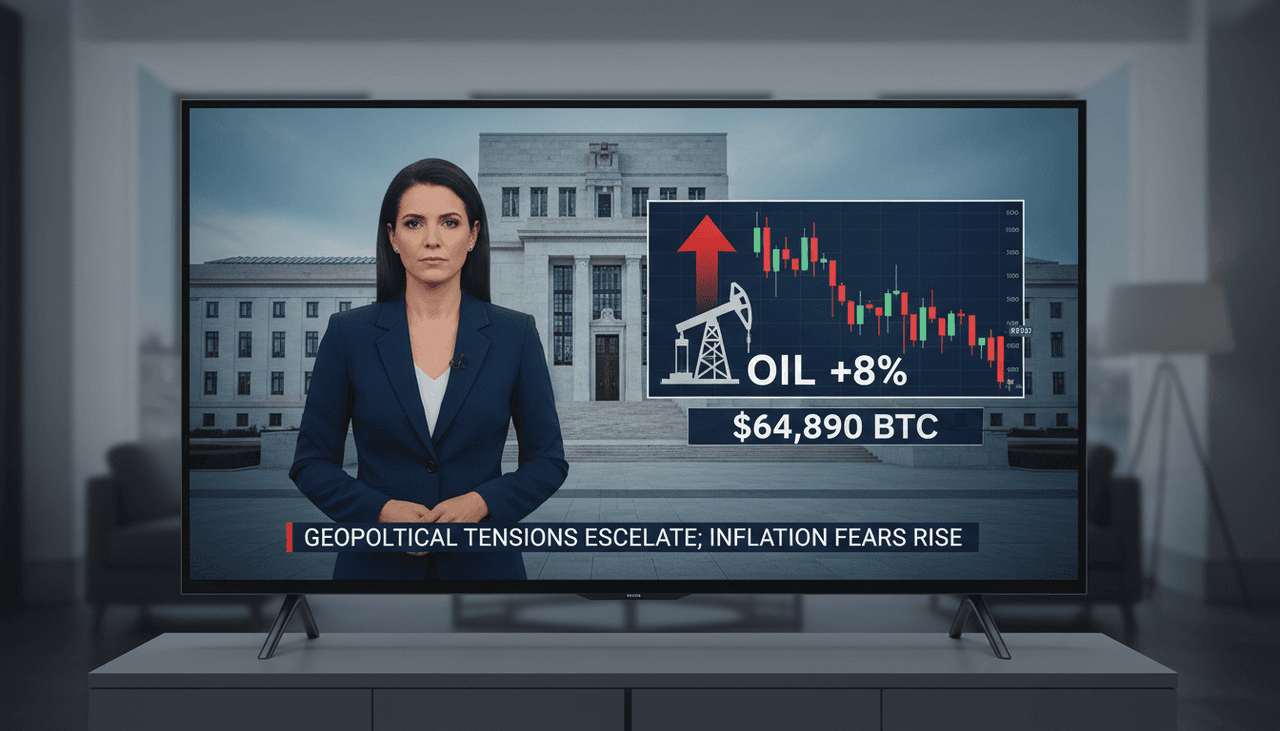
CoinGecko attributes this widespread market contraction to a perfect storm of bearish factors. The report highlights how lingering negative momentum from late 2025 converged with escalating global geopolitical instability, specifically citing the fallout from US-Israeli strikes on Iran in February. These events fueled broader fears of an economic slowdown, prompting investors to de-risk across various asset classes.
Adding to the market's woes was the nomination of Kevin Warsh as the new US Federal Reserve chair. This development was widely interpreted as a signal for a potential hawkish shift in US monetary policy, further dampening investor sentiment and increasing the appeal of less volatile assets.
Bitcoin's Underperformance and Exchange-Specific Impacts
Even Bitcoin (BTC), often seen as a bellwether for the broader crypto market, struggled significantly during this period. The leading cryptocurrency fell 22% over the first quarter, notably underperforming traditional equity indexes like NASDAQ and S&P 500, which saw declines of 7.1% and 4.8% respectively—their worst quarterly returns since 2022.
The downturn was not uniform across all platforms, though all top 10 CEXs recorded declining volumes. HTX, formerly known as Huobi, experienced the most severe slump, with its volumes dipping by a staggering 55% quarter-on-quarter to $133.6 billion. This highlights the intensified competition and liquidity challenges faced by exchanges during prolonged bear markets.
What This Means for Traders and Investors
The pronounced drop in CEX volumes and the declaration of a 'sustained crypto winter' underscore a critical period for market participants. Reduced liquidity can lead to increased volatility and wider bid-ask spreads, making large trades more challenging and potentially more costly. For traders, this environment demands heightened caution and a focus on risk management.
The confluence of geopolitical tensions, economic uncertainty, and hawkish monetary policy expectations suggests that a swift recovery might not be on the immediate horizon. Investors should closely monitor macroeconomic indicators, central bank communications, and geopolitical developments, as these external factors are currently exerting significant influence over crypto market dynamics. The market's ability to decouple from traditional finance remains a key question as this 'winter' persists.
Key points: Centralized crypto exchange (CEX) spot trading volumes plummeted 39% in Q1 2026, totaling $2.7 trillion, signaling a 'sustained crypto winter' according to CoinGecko. • March 2026 was the weakest month, recording only $800 billion in CEX volume, the lowest since November 2023. • Key drivers for the downturn include geopolitical instability (US-Israeli strikes on Iran), fears of an economic slowdown, and expectations of hawkish US monetary policy under a new Fed chair. • Bitcoin fell 22% in Q1, underperforming traditional equity markets, while individual exchanges like HTX saw volume drops as high as 55%.
FAQ
What does CoinGecko mean by 'sustained crypto winter'?
CoinGecko's declaration of a 'sustained crypto winter' refers to the prolonged period of significantly reduced trading activity, market capitalization decline, and underperformance of major cryptocurrencies like Bitcoin, particularly evidenced by the 39% drop in CEX volumes in Q1 2026.
What were the primary factors contributing to the Q1 2026 crypto market downturn?
The downturn was primarily driven by a combination of factors: lingering bearish momentum from late 2025, global geopolitical instability (specifically US-Israeli strikes on Iran), broader fears of an economic slowdown, and the anticipation of a hawkish shift in US monetary policy following Kevin Warsh's nomination as Federal Reserve chair.