Bitcoin Futures Flash Caution, But Whales Hold Steady Amid Macro Headwinds

Bitcoin's futures market shows rising caution with negative funding rates, yet whale long-to-short ratios remain stable. Explore how macro factors like Fed policy and inflation are
Bitcoin Futures Signal Caution as Macro Pressures Mount
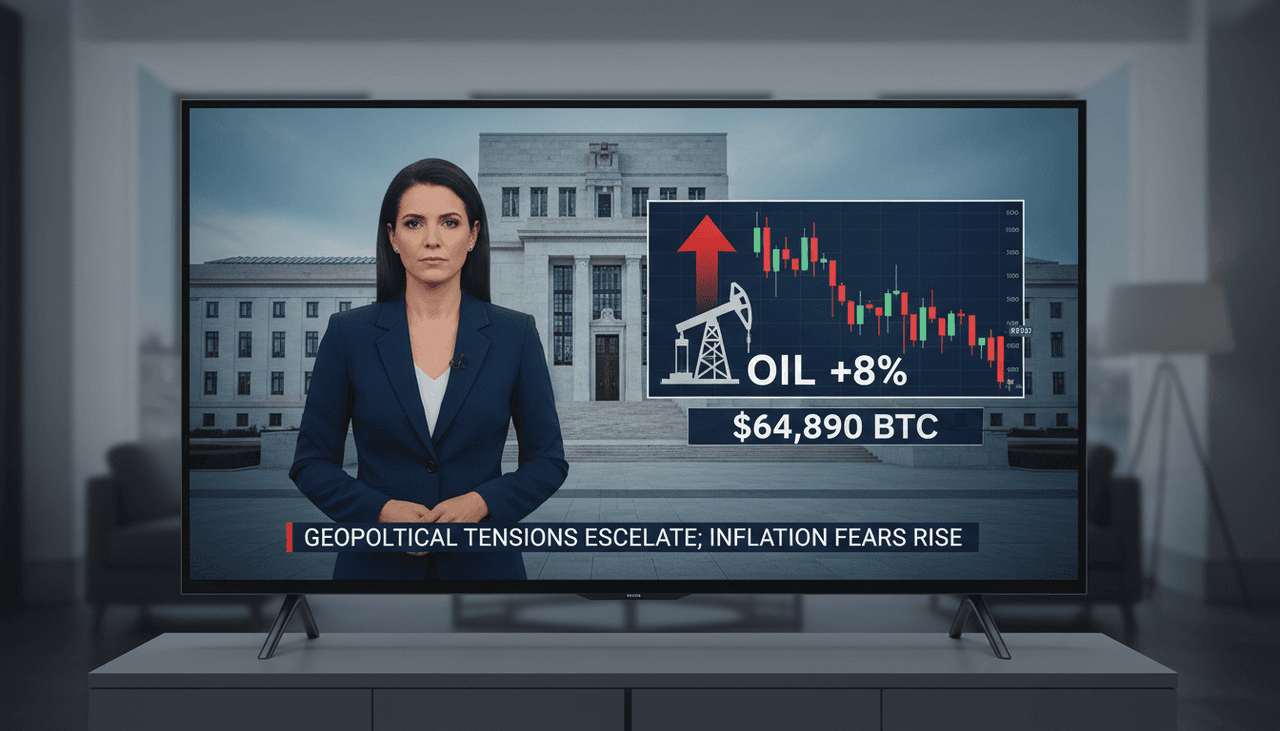
Bitcoin (BTC) recently faced a significant rejection at the $77,800 mark, subsequently retesting the $76,000 level. This price action unfolded against a backdrop of broader market unease, mirroring a correction in the S&P 500 Index and rising crude oil prices, which have now climbed towards $118 a barrel as geopolitical tensions persist. While demand for leveraged bearish Bitcoin futures positions has seen an uptick, a closer examination of whale long-to-short ratios on major exchanges paints a more nuanced picture.
Funding Rates Turn Negative, Hinting at Short-Term Bearishness
A key indicator of market sentiment in the derivatives space is the Bitcoin perpetual futures funding rate. Historically, this rate typically hovers between 6% and 12% annually, reflecting the cost for long positions to maintain their leverage. However, the funding rate for Bitcoin perpetual futures recently dipped into negative territory, a shift from a brief neutral-to-bullish period. A negative funding rate implies that short sellers are now paying long holders, signaling an increased demand for leveraged short positions and a general lack of confidence among buyers.
This metric has largely remained negative over the past two weeks, suggesting a sustained bearish bias among a segment of leveraged traders. While this might initially suggest a widespread capitulation, it's crucial to differentiate between short-term speculative positioning and the conviction of larger market participants.
Whales Remain Resilient Amidst Market Jitters
Despite the negative funding rates, data on top traders' long-to-short ratios across exchanges, which encompasses spot, margin, and futures positions, tells a different story for institutional players. On Binance, the long-to-short ratio for professional traders stood at 0.80, a slight improvement from the 0.75 recorded earlier in the week, though still indicating a minor bearish tilt. Similarly, at OKX, top traders have shown temporary bullish shifts, but critically, there's no evidence of a significant bearish pivot among whales; their long-to-short ratios have held remarkably steady throughout the recent volatility.
This resilience suggests that while retail and short-term traders might be hedging or speculating on further downside, larger, more sophisticated investors are largely maintaining their long-term positions, viewing current dips as temporary fluctuations rather than a fundamental shift in Bitcoin's trajectory.
Macroeconomic Headwinds and the Fed's Stance
The prevailing market caution is heavily influenced by macroeconomic factors. The Federal Reserve, following its latest meeting, acknowledged that "inflation is elevated, in part reflecting the recent increase in global energy prices." The Federal Open Market Committee (FOMC) opted to keep interest rates at their late 2025 levels, despite four members dissenting in favor of a 0.25% cut – a rare occurrence not seen since 1992. This hawkish stance, coupled with persistent inflation and high energy costs, continues to weigh on investor sentiment, impacting both traditional markets like the S&P 500 and risk assets such as Bitcoin.
Concerns over the inflationary impact on consumer spending and corporate earnings, particularly within the technology sector, are also contributing to the cautious outlook. Investors are scrutinizing the profitability of significant AI investments made by tech giants, adding another layer of uncertainty.
MicroStrategy's Unwavering Conviction
Amidst these cautious signals, MicroStrategy (MSTR US) continues its aggressive Bitcoin accumulation strategy, providing a strong counter-narrative to the prevailing short-term bearishness. Over the last four weeks alone, MicroStrategy acquired an additional 56,235 BTC, financed in part by its perpetual preferred security, STRC. The company now holds an impressive 818,334 BTC, surpassing even BlackRock’s IBIT exchange-traded fund (ETF) in its holdings. This unwavering institutional conviction from a publicly traded company underscores a belief in Bitcoin's long-term value, irrespective of immediate market fluctuations.
What's Next for Traders
While Bitcoin's perpetual futures funding rates signal short-term caution, the steady long-to-short ratios among whales suggest that larger players are not capitulating. Traders should closely monitor the interplay between macro factors – particularly inflation data and the Federal Reserve's future policy decisions – and Bitcoin's ability to reclaim and hold key resistance levels. The continued accumulation by entities like MicroStrategy provides a bullish undercurrent, but the immediate path for BTC remains subject to broader economic sentiment and traditional market performance.
Key points: Bitcoin perpetual futures funding rates have turned negative, indicating a short-term bearish bias among leveraged traders. • Despite this, whale long-to-short ratios on major exchanges show large investors are largely holding their positions, not actively turning bearish. • Macroeconomic factors like persistent inflation, high energy prices, and the Federal Reserve's hawkish stance are key drivers of current market caution. • MicroStrategy continues its aggressive Bitcoin accumulation, signaling strong institutional conviction independent of short-term market fluctuations.