Bitcoin Dips to $70.6K as US Blockades Hormuz Strait Amid Iran Nuclear Standoff

Bitcoin fell to $70.6K and oil surged after the US announced a blockade of the Strait of Hormuz following failed peace talks with Iran over its nuclear program. Discover the market
Geopolitical Tensions Rock Markets: Bitcoin Dips, Oil Surges
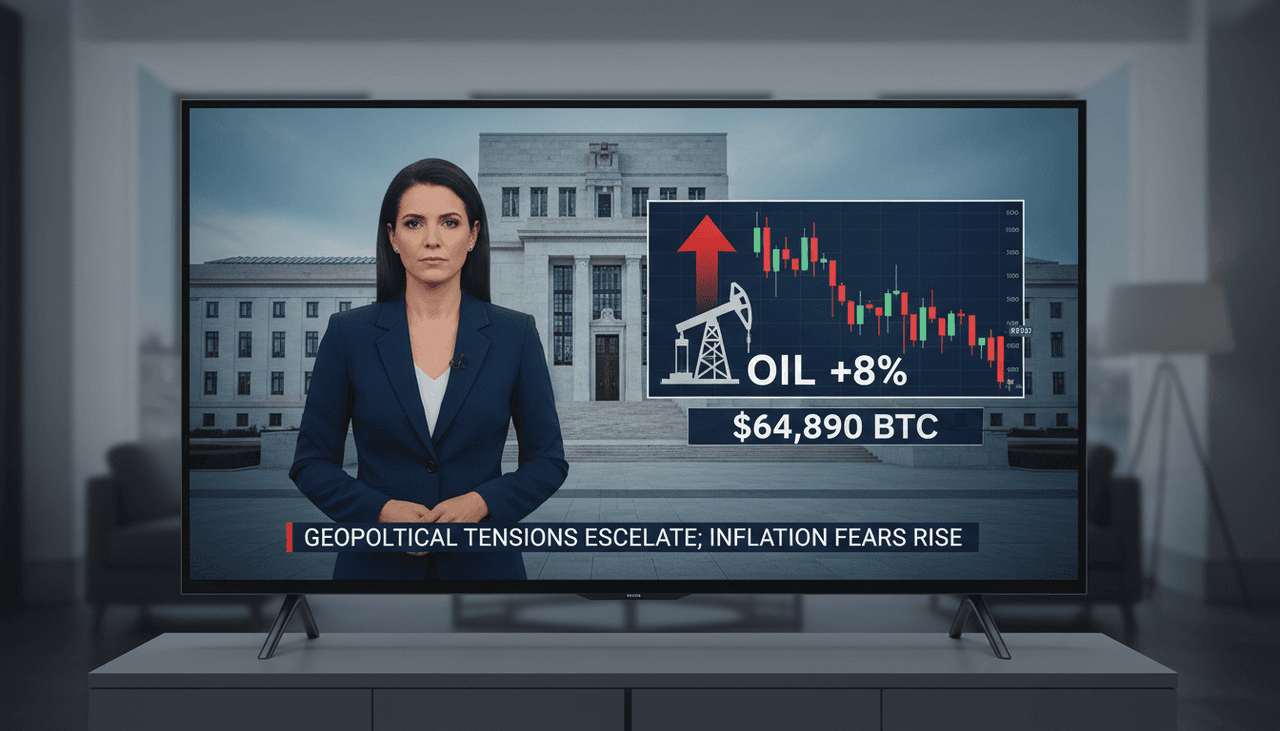
Global financial markets reacted sharply to escalating geopolitical tensions after the United States announced a blockade of the Strait of Hormuz. Bitcoin (BTC) saw an immediate downturn, dipping as low as $70,623, while crude oil prices surged by a significant 9.5% to $105 per barrel within minutes of the US futures market open.
The catalyst for this market volatility was US President Donald Trump's confirmation via Truth Social that peace talks with Iran had collapsed. Trump attributed the failure to Iran's unwavering stance on its nuclear weapons program, which he stated was the "only issue that really mattered." The subsequent blockade of the Strait of Hormuz, a critical maritime chokepoint through which one-fifth of the world's oil supply passes, signals a significant escalation in the ongoing dispute.
Hormuz Blockade and Iran's Demands
The US-Iran dispute over control of the Strait of Hormuz has been a source of considerable market disruption over the past six weeks, particularly for oil, which has experienced its highest volatility since early 2022. Beyond the nuclear program, Iran had also reportedly demanded war reparations and the unfreezing of its blocked financial assets as conditions for a ceasefire. However, Trump's public statements focused solely on the nuclear issue, sidestepping these other demands.
Further intensifying the situation, Trump labeled Iran's alleged use of mines in the waterway and demands for tolls as "world extortion." He subsequently issued orders for the US Navy to block any vessels that complied with Iranian tolls and to neutralize any mines present in the strait.
Bitcoin's Resilience Amidst Conflict
Despite the recent dip, Bitcoin's performance since the broader US-Iran conflict began on February 28th — following a US airstrike that killed Iran's Supreme Leader Ayatollah Ali Khamenei — tells a more complex story. Since that date, Bitcoin has actually risen approximately 7.4% to $71,194, demonstrating a surprising resilience.
Notably, Bitcoin has managed to outperform both the S&P 500 and gold over this period, clawing back some ground after hitting a high of $126,080 in October. This suggests that while immediate geopolitical shocks can trigger short-term corrections, Bitcoin's long-term narrative as a potential safe-haven asset or a hedge against traditional market instability continues to evolve, even amidst significant global unrest.
What Traders Should Watch Next
- Geopolitical Escalation: Any further military actions or diplomatic breakdowns could trigger additional market volatility, especially in oil and potentially Bitcoin.
- Oil Market Dynamics: The Strait of Hormuz blockade's duration and effectiveness will directly impact global oil supply and prices, with knock-on effects for broader economic sentiment.
- Bitcoin's Safe-Haven Narrative: Observe how Bitcoin continues to react to sustained geopolitical pressure compared to traditional assets. Its ability to maintain gains or recover quickly will be a key indicator for its role in a turbulent world.
Key points: Bitcoin dipped to $70.6K and oil surged to $105/barrel after the US announced a blockade of the Strait of Hormuz following failed nuclear talks with Iran. • The Strait of Hormuz is critical, handling one-fifth of global oil trade, making its blockade a major geopolitical and economic event. • Despite the immediate downturn, Bitcoin has risen 7.4% since the broader US-Iran conflict began in late February, outperforming the S&P 500 and gold. • Traders should monitor further geopolitical developments and the duration of the Hormuz blockade for continued market volatility, especially in energy and crypto.